
Ceramic Coating vs PPF: Which One Actually Protects Your Car Better in UAE Conditions?
Anyone researching how to protect their car’s paint in the UAE runs into two names again and again, ceramic coating and paint protection film. Both promise to keep a car looking newer for longer, but they solve different problems in completely different ways. A proper ceramic coating vs PPF comparison comes down to understanding what each one actually does rather than picking whichever sounds more premium at the counter.
Round 1: What Each Product Actually Is
Ceramic coating is a liquid polymer that chemically bonds with a car’s clear coat, forming an extremely thin, hard layer on top of the factory paint. Paint protection film, often called PPF, works on an entirely different principle, since rather than a chemical coating, it is a thick, transparent urethane film applied as a physical layer over the paint, similar in concept to an advanced screen protector. One changes the surface chemistry of the paint, while the other adds a physical buffer on top of it, and that distinction shapes everything else about how each performs.
Round 2: What Ceramic Coating Does Once Applied
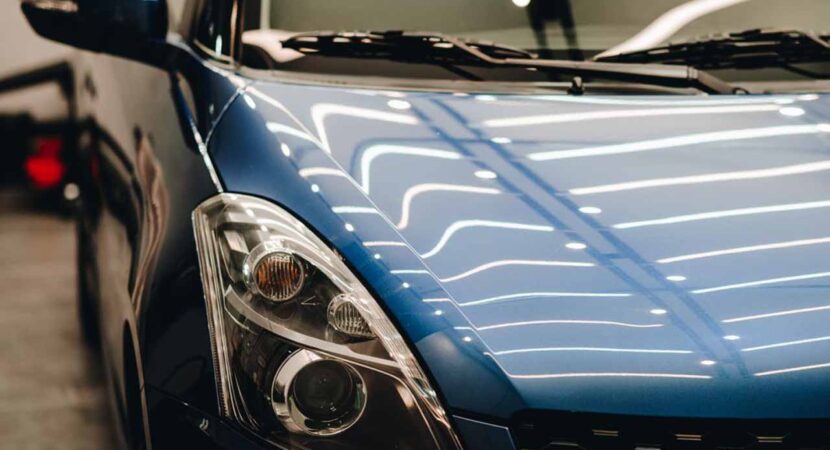
Once cured, ceramic coating creates a hydrophobic surface, meaning water beads up and rolls off rather than sitting and drying into water spots, and it adds a noticeable depth and gloss to how the paint looks. It also forms a barrier against chemical contaminants like bird droppings, tree sap, and road grime, making them easier to rinse off before they can etch into the paint. Because the coating layer itself is measured in microns, it does not add meaningful physical thickness or cushioning to the surface underneath.
Round 3: What PPF Does Once Applied
PPF’s physical thickness is what allows it to absorb the impact of small stone chips, road debris, and minor scratches that would otherwise reach the paint directly. Many modern films also include a top layer that uses heat, from the sun or warm water, to smooth out light surface scratches and swirl marks over time, a property ceramic coating simply does not have. 3M, one of the original developers of automotive paint protection film, offers a detailed breakdown of how their film technology works on their official car personalization page.
Round 4: Sun and Sand, Two Different Enemies
The UAE’s climate presents two distinct challenges for paint protection, chemical degradation from intense sun and heat, and physical damage from fine airborne sand and grit, particularly during highway driving or a sandstorm. These two challenges are not addressed equally by both products, since ceramic coating handles the chemical and UV side of the equation well, slowing paint oxidation and fading on a car parked outdoors for long periods, while PPF is the stronger choice against physical abrasion and impact, since its thickness provides a genuine buffer against the fine sand pitting and stone chips common on UAE highways at higher speeds.
Round 5: The Chip and Scratch Test
This is where the two products diverge most clearly. Ceramic coating, despite its hardness, is still a microscopically thin layer, so it offers very limited protection against real physical impacts like stone chips or scratches from careless contact, while PPF’s thickness is specifically built to absorb this kind of impact, and a stone that would chip bare paint, or paint protected only by ceramic coating, will often be absorbed by PPF without leaving a mark. This is why PPF typically goes on high-impact zones like the front bumper, hood, mirrors, and leading edges, even on cars that also carry a full exterior gloss and gel coating elsewhere.
Round 6: The UV and Fading Test
For long-term protection against sun-related fading, ceramic coating generally has the edge, since its chemical makeup is specifically designed to reflect UV radiation and slow the breakdown of the clear coat underneath. PPF also blocks some UV as a side effect of being a physical barrier, but that is not its primary purpose, and a lower-quality film that is not properly UV stabilized can sometimes yellow slightly after many years of intense sun exposure.
Round 7: What Each One Asks of You Afterward
Ceramic coating needs relatively little ongoing maintenance beyond regular washing, though its hydrophobic properties gradually fade and typically need a top-up coating after one to three years depending on the product and how the car is cleaned. PPF asks for more care around avoiding harsh chemical cleaners that can weaken the film’s adhesive over time, but a well-installed, quality film can last five to ten years, and its self-healing properties mean less need for manual scratch correction along the way.
Round 8: Weighing the Cost Against What You’re Actually Buying
Ceramic coating is generally the more affordable option upfront and suits owners mainly concerned with gloss, ease of cleaning, and protection against chemical staining and sun fading. PPF represents a larger initial investment but addresses a category of damage, physical impacts and chips, that ceramic coating was never designed to prevent, and thinking about the price gap in terms of what each product actually guards against, rather than comparing them as interchangeable options at different price points, makes the decision much clearer.
Why Many UAE Owners Choose Both (H2)
Many vehicle owners here combine both technologies rather than picking one over the other, and for good reason, since the two work well together. A common approach applies protective film to high-impact areas like the front bumper, hood, and mirrors, then adds ceramic protection over the entire vehicle, including on top of the film in those protected zones, giving physical impact resistance exactly where it is needed most, along with the UV resistance, gloss, and easy-clean properties of ceramic coating across the whole car. Some owners planning a style change also combine either treatment with a full color change vehicle wrap, which can sit alongside PPF on the same vehicle when planned correctly from the start.
Matching the Right Protection to How You Actually Drive
If your car spends most of its time on city streets at moderate speed and is garaged or shaded most of the time, ceramic coating alone may be enough, particularly if your priority is appearance and easy upkeep. If you frequently drive UAE highways at higher speeds, especially on routes with loose gravel or ongoing roadwork, or you are protecting a newer or higher-value vehicle where even minor chips matter, PPF on the key impact zones is worth the extra investment, with or without ceramic coating layered on top, and either decision benefits from starting with a proper best paint protection film assessment to map out which zones actually need it.
Why the Prep Work Matters as Much as the Product
Whichever option you choose, the condition of the paint before either product goes on has a real effect on the final result. Existing swirl marks or light scratches get sealed in underneath either product if they are not addressed first through a proper paint correction and polishing pass, which is why that step matters just as much as the protective detailing work that follows it.
Getting Expert Guidance Before You Commit
At ZinQ Garage, our detailing specialists walk owners through both options based on how the car is actually driven and parked, rather than defaulting to whichever service has a higher margin. There is no single universally better option between ceramic coating and PPF, since they solve different problems, and understanding what each one actually guards against is what makes the difference between a choice you are happy with in six months and one you are still happy with in five years.
Still Deciding Between the Two?
Both options work well, but the right one depends entirely on how and where you drive. Get a paint protection consultation with ZinQ Garage and walk away with a clear recommendation instead of a guess.