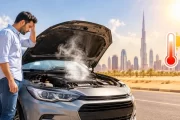

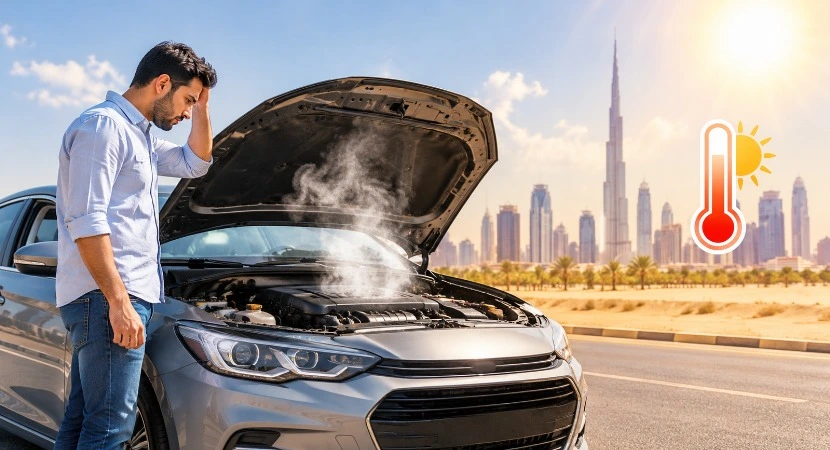
Car overheating in UAE summer is a problem many drivers face, and seeing the temperature gauge climb on a hot highway is stressful. The good news is that a calm and correct reaction can save your engine. This guide explains why overheating happens here, how to spot it early, what to do in the first few minutes, and how to avoid it next time.
Why Engines Run Hotter Here
Your engine’s cooling system works by passing heat from the engine into the outside air. When the air is already very hot, it can take away less heat, so the system has very little spare capacity. Add traffic, slow speeds, and the AC running, and even a small weakness can push the temperature up.
Early Warning Signs You Shouldn’t Ignore
Overheating rarely starts suddenly. Most cars give small hints first, and catching them early usually means a cheap fix instead of an engine repair. Watch for these signs.
- The temperature gauge sits higher than usual
- A sweet smell, or steam coming from under the bonnet
- The AC feels less cold than normal
- A coolant warning light or reduced engine power
- Green, pink, or orange fluid on the ground under the car
A weaker AC can be an early hint, because the AC condenser sits in front of the radiator and shares its airflow. If you notice this, why the cabin cooling fades in peak heat explains how the two problems can be connected.
Common Causes of Overheating
Most overheating comes from a handful of faults. Understanding them helps you describe the problem clearly to a mechanic and avoid paying for the wrong repair.
Low Coolant and Leaks
Coolant runs in a sealed loop, so the level should not drop. If it does, the liquid is leaking somewhere, often from a hose, a clamp, the radiator, or a worn cap. This is the most common cause of overheating and usually the easiest to fix when found early.
Thermostat and Water Pump Faults
The thermostat is a valve that controls coolant flow, and the water pump pushes coolant around the engine. If the thermostat sticks shut or the pump weakens, hot coolant stays in the engine, and the temperature rises even when the coolant level looks fine.
Radiator Blockage and Fan Failure
Sand and dust can block the outside of the radiator, while rust and sludge can clog it from inside. The cooling fan also pulls air through the radiator when you are moving slowly, so a failed fan explains why some cars overheat in traffic but cool down on the highway. Regular radiator and coolant care keeps these parts working in peak summer.
Head Gasket and Internal Engine Problems
The head gasket seals the engine’s combustion area from the coolant passages. If it fails, you may see white exhaust smoke, milky oil, or repeated coolant loss with no visible leak. This is the most serious cause, and it gets worse every minute you keep driving.
What to Do If the Temperature Gauge Spikes
The first few minutes matter most. The aim is to reduce heat quickly and stop before permanent damage happens, so the right order of actions is important.
On the Road, Step by Step
Follow these steps in order.
- Turn the AC off and put the heater on full with the fan at maximum. This pulls some heat away from the engine.
- Signal and move to a safe place, such as the hard shoulder or a service area.
- Switch the engine off and turn on the hazard lights.
- Wait at least 20 to 30 minutes for everything to cool before touching anything under the bonnet.
- If the gauge stays high or you see steam, call for recovery instead of restarting the engine.
What Not to Do
Never open the radiator or coolant cap while the engine is hot, because the system is under pressure and can spray scalding liquid. Don’t pour cold water on a hot engine, since sudden cooling can crack metal parts. And don’t keep driving to reach the next exit with the gauge in the red, because that short distance can cost you the engine.
Can You Keep Driving After It Cools Down?
Sometimes, but only carefully. If the coolant was slightly low and there is no visible leak, topping it up with the correct coolant may get you to a workshop slowly. If the car overheats again, leaks heavily, loses power, or smells of burning, stop and have it towed. Repeated overheating is how a small fault becomes a major engine repair.
How to Prevent Overheating
Prevention is cheaper than any repair. A few simple habits before and during summer cover most of the risk.
Coolant Quality and Level
Check the coolant level only when the engine is cold, and use the type your car’s manual specifies. Coolant loses its protective ability with time, so replace it at the recommended interval and not only when something goes wrong. Dubai’s RTA also lists engine oil and coolant checks among its summer vehicle safety tips, since cars are more prone to overheating in the hot months.
Keeping Airflow Clear
Ask for the radiator and AC condenser fins to be cleaned of dust and sand, especially if you drive near construction or off-road. Also make sure the cooling fan switches on when the engine warms up, because airflow is what carries the heat away.
Routine Checks Before Summer
Squeeze the hoses to check they are firm and not cracked; look at the belts and inspect the cap seal. Heat also weakens other parts, so it is smart to test a tired battery at the same time, as explained in this guide on how long a battery lasts in extreme heat.
When Overheating Points to Something Bigger
If the temperature rises again after a top-up, or if you notice white smoke, bubbles in the coolant tank, or milky oil, get the engine checked properly. A technician can pressure-test the cooling system and look for internal damage.
Following the right service interval for your car is the best protection against these problems. Zinq Garage’s technicians suggest a coolant and radiator check before the hot months begin, because it is one of the easiest faults to prevent.