
Buying a second-hand car can save you a lot of money, but only if you know what you are buying. Following a simple used car buying checklist for the UAE buyers helps inspect the vehicle in a logical order, starting with paperwork, then moving to the body, cabin, engine bay, test drive, and electronics. You do not need to be a mechanic to follow these essential steps and make a smart purchase with Zinq Garage.
Why a Used Car Needs a Closer Look in the UAE Climate
Two cars of the same age can be in very different shapes here. Long periods of high heat, dust, and short stop-start trips wear down parts faster than mileage alone suggests. Knowing this helps you judge a car by its condition, not just by the number on the odometer or the year on the registration card.
Start With the Paperwork Before the Car
Paperwork tells you who owns the car, what it has been through, and whether the sale will go smoothly. It takes ten minutes and can save you from a deal that falls apart later, so do it before you get attached to the car.
Registration, Ownership, and Outstanding Fines
Check that the name on the registration card matches the seller’s ID and that the chassis number on the card matches the number on the car itself. That 17-digit chassis number is also what you use to look up the car’s accident history through official RTA and Ministry of Interior services, as explained in this Gulf News guide to key used car checks. Also ask whether any fines or bank finance are still linked to the vehicle, because these can block or delay the ownership transfer.
Service History and Mileage Consistency
A full service record shows that the car was looked after. Look for regular service dates and mileage numbers that rise steadily from one entry to the next. A sudden drop in mileage, long gaps, or missing pages are signs to ask more questions or walk away.
Walk-Around: Signs of Past Accident or Repaint
A quick walk around the car in daylight can show you a lot about its past. You are looking for anything that suggests the car was repaired, because a repair is not always a problem, but a hidden one is.
Panel Gaps and Paint Mismatch
Stand at an angle and look along the side of the car. The gaps between doors, bonnets, and boots should be even, and the paint shade and shine should look the same on every panel. Uneven gaps or paint on rubber trims often mean a previous respray after damage, so ask the seller what happened.
Underbody, Chassis, and Structural Signs
The chassis is the car’s main frame, and it protects you in a crash. Look at the metal rails under the bonnet, the boot floor, and behind the bumpers for crumpled metal, fresh sealant, or uneven welds. If anything looks suspicious, get an expert to check for bent frames or structural damage before you agree on a price.
Flood or Water Damage Clues
Water damage often shows up months later as electrical faults. Smell the cabin for dampness, lift the carpet or spare wheel cover to look for silt or rust, and check for fogging inside the headlights. Any of these is a good reason to be careful.
Inside the Cabin and Under the Bonnet
Once the outside looks fine, move to the parts you touch and use every day. These checks are quick and show how well the car has been maintained.
AC Performance and Electronics
Run the AC on full for a few minutes. It should turn cold quickly and stay cold without strange noises. Then try every window, lock, mirror, screen, and button, and make sure no warning lights stay on after the engine starts.
Fluids, Belts, and Battery
With the engine off and cool, check the oil level and color, the coolant level, and the brake fluid. Look for cracked belts, soft or swollen hoses, and white or green crust on the battery terminals. Ask how old the battery is, because heat shortens battery life noticeably.
The Test Drive: What to Feel and Listen For
A test drive is where many hidden problems show up. Plan at least 15 to 20 minutes, with a mix of slow traffic and faster roads, and keep the radio off so you can hear the car.
Gearbox and Clutch Behaviour
An automatic should change gears smoothly, without jerking or revving high between shifts. A manual clutch should grip at a predictable point and not slip when you accelerate. Hesitation or harsh shifts can point to gearbox wear, which is one of the costlier faults on a used car.
Brakes, Steering, and Suspension
On a straight road the car should not pull to one side. Listen for knocking over bumps, and feel for shaking in the steering wheel or brake pedal when you slow down. These signs usually mean worn suspension, tires, or brakes.
What a Scan Tool Can Reveal That Your Eyes Can’t
Modern cars store fault codes in their computers, even when no warning light is on. A seller can also clear the lights just before you arrive, so a clean dashboard is not proof of a clean car. A workshop can read the car’s stored fault codes and check whether codes were cleared recently, which can expose hidden engine, gearbox, and sensor problems in a few minutes.
When to Get an Independent Technical Opinion
If the car is expensive, a premium model, or you simply don’t feel confident judging it, get a neutral expert to look at it before you pay any deposit. A written second-opinion inspection before buying also gives you real evidence to negotiate the price or to walk away.
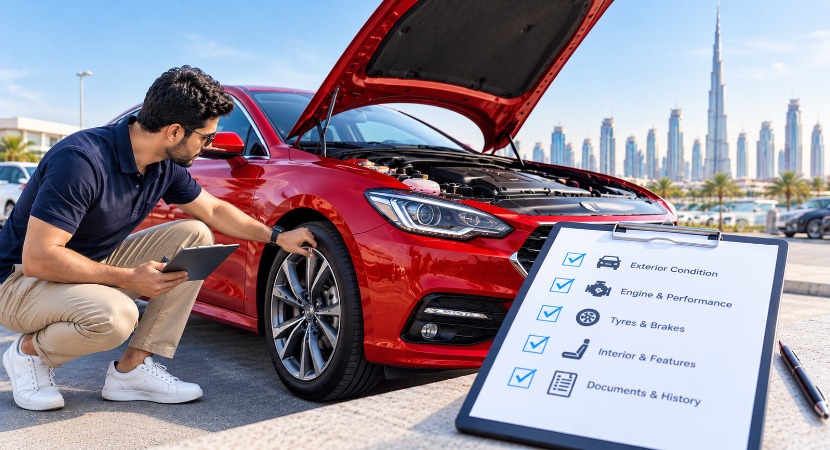
A Short Checklist to Carry With You
Here is everything above in a form you can read on your phone while standing next to the car. Tick each point honestly, and treat any “no” as something to question or price in.
- Documents match the seller and the chassis number
- Accident history and fines have been checked
- Service history is complete, and mileage makes sense
- Paint, panel gaps, and underbody look original, or the seller explains the repairs
- No flood clues and no warning lights
- AC cools fast, and all electronics work
- The test drive feels smooth, with no pulling, slipping, or knocking
- Scan results are clean, or any faults are reflected in the price
A checklist cannot replace an expert’s eye, but it removes most problem cars before you spend any money. Zinq Garage’s technicians recommend never skipping the scan and structural checks, even on a car that looks perfect.